
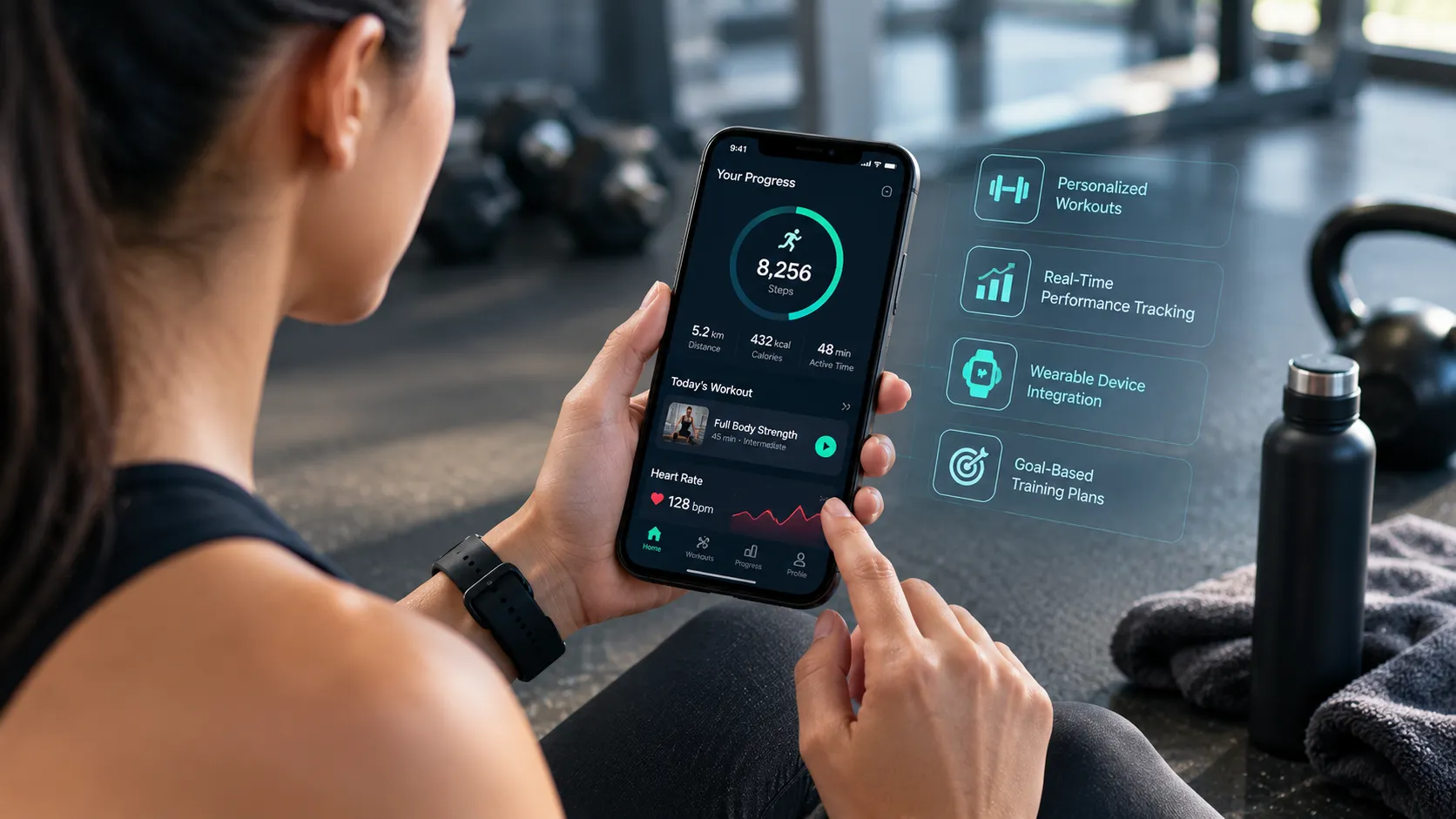
Rania Al-Farsi had been swimming competitively since she was eleven. By the time she was twenty-six, she was training six days a week at a club in Muscat without a full-time personal coach, supplementing her group coaching sessions with self-directed training that she had been designing by intuition and internet research for three years. Her 100-meter freestyle time had plateaued at the same level for fourteen months. She knew she was fit. She could feel the fitness in the water. What she couldn’t identify was why the fitness wasn’t translating into the time improvement she was training for, and nobody in her training environment had the time or the data access to answer that question specifically for her. When she started using a swim analysis application that processed her wearable’s pool tracking data alongside a structured training log, the answer took three weeks to surface: her easy aerobic volume was inadequate relative to her race-pace work. She had been training at high intensity too frequently for her aerobic system to build the base that race-pace performance depends on. The balance was wrong in a way that felt like hard training but was producing metabolic fatigue rather than aerobic adaptation. Adjusting the intensity distribution over the following twelve weeks produced a personal best that she had been three years away from achieving on her intuitive approach. The fitness app development company that built that analysis tool hadn’t coached her. It had given her the data perspective that a good coach would have identified after three weeks of close observation, at a fraction of the cost and at the time of night when she was reviewing her training rather than during a poolside session when that kind of conversation is impractical. Rania’s experience is one version of what fitness application development is doing to modern sports training: distributing the kind of performance intelligence that elite programs have built into their coaching infrastructure to athletes who train without the support structures those programs provide.
The Intelligence Gap in Non-Elite Sports Training
The gap between how elite athletes are trained and how serious recreational and sub-elite athletes are trained is primarily an intelligence gap rather than a resource gap. Elite programs have sports scientists who analyze training load, physiologists who monitor recovery indicators, biomechanists who identify technique inefficiencies, and coaches who synthesize all of that information into training prescriptions specific to the individual athlete’s current state and performance trajectory.
A club swimmer training six sessions per week, a marathon runner preparing for a spring race, a recreational triathlete balancing training with full-time work: each of these athletes is serious enough about their sport to commit substantial time and effort, but they are training without the analytical infrastructure that would allow them to direct that time and effort as effectively as the elite programs do. The training happens. The intelligence that would make it more effective is absent.
Fitness applications have been closing this gap progressively as the wearable sensor ecosystem has matured and as the analytical capabilities embedded in training platforms have grown more sophisticated. The physiological data that previously required laboratory access, lactate testing, metabolic carts, force plates, is now approximated through consumer devices with accuracy that, while not laboratory-grade, is sufficient to identify the patterns that matter for training prescription at the recreational and sub-elite level.
Sport-Specific Analysis and the Departure From Generic Fitness Tracking
The earliest fitness applications applied the same tracking framework to every sport: steps, calories, heart rate, duration. That framework was adequate for general health monitoring and entirely inadequate for sport-specific performance development. A swimmer’s performance is not meaningfully illuminated by step count. A cyclist’s development cannot be tracked through heart rate alone without accounting for the power output that produced that heart rate. A tennis player’s fitness needs aren’t captured by any of the metrics that a generic fitness tracker prioritizes.
Sport-specific fitness applications have replaced the generic framework with analytical models built around the physiological and technical demands of specific sports. A cycling application that tracks power output, cadence, training stress score, and chronic training load is giving the cyclist information that a generic fitness tracker cannot provide. A swimming application that analyzes stroke count per length, distance per stroke, and interval pace distribution is giving the swimmer data about their technique efficiency that no heart rate monitor reveals.
The value of sport-specific analysis is highest at the intersection of training load management and technique development, because those two dimensions interact in ways that sport-specific data can reveal and generic data cannot. Rania’s plateau was visible only in the combination of her training intensity distribution and her interval pace data across several weeks. Neither data point alone explained the plateau. Their relationship, surfaced by an application designed to analyze swim training rather than generic aerobic activity, was what made the problem identifiable.
Wearable Integration and the Real-Time Coaching Layer
The wearables ecosystem has evolved to a point where sport-specific sensor data is available for most major training sports without requiring professional-grade equipment. Optical heart rate monitors with sufficient accuracy for training zone work, GPS units with pace and distance precision adequate for running and cycling training, power meters that have come down from professional pricing to recreational athlete accessibility, and dedicated swim watches that track pool lengths, stroke rate, and interval structure are all available at price points that serious recreational athletes routinely accept.
The application layer that makes this hardware valuable is the analytical intelligence that processes the raw data into training-relevant insights. A GPS watch that records a run produces pace data. An application that analyzes that pace data in the context of the athlete’s training history, their recent load accumulation, the specific training objective of the session, and the physiological zone distribution across the run is producing coaching intelligence rather than data storage.
The real-time dimension of this coaching layer is developing as the application ecosystem evolves. Running applications that provide pace alerts during a session when the athlete’s heart rate indicates they are running above their intended zone are providing guidance in the moment that changes the session’s physiological outcome rather than only analyzing the outcome after the fact. Swim pace guidance provided through poolside display systems integrated with the athlete’s application, or through bone conduction audio in swim earbuds, is extending the real-time coaching layer into water environments where smartphones are impractical.
Recovery Analytics and the Training Load Paradox
The most counterintuitive insight that fitness applications are delivering to serious recreational athletes is that the training error producing their stagnation is usually too much high-intensity work rather than too little. Serious athletes who are not improving tend to train harder in response to the plateau, which typically deepens the problem because the plateau is often caused by accumulated fatigue that reduces the training adaptation the sessions are designed to produce.
Heart rate variability monitoring, delivered through overnight measurement by modern wrist-worn devices and interpreted by applications with individualized baseline models, provides a daily readiness assessment that identifies when accumulated training stress has suppressed the athlete’s readiness to absorb high-intensity training. An athlete whose HRV trend has been declining for a week and whose resting heart rate has been elevated is showing physiological signs of under-recovery that warrant reduced training intensity regardless of how they subjectively feel or how far ahead of their target race they are.
The training load management frameworks that applications apply to this data, acute-to-chronic workload ratios, training stress balance scores, and fitness and fatigue models, provide a structured approach to load management that prevents the over-training that plateaus serious recreational athletes more frequently than under-training does.
Video Analysis and Technique Development
The technique component of sports performance has been the hardest dimension to address through application development because technique assessment is inherently visual and has historically required a trained eye to interpret. The development of accessible computer vision tools is changing this, making technique assessment available through the devices that athletes already carry.
Running gait analysis applications that use a smartphone camera positioned beside a treadmill can estimate ground contact time, vertical oscillation, cadence, and footstrike pattern with accuracy sufficient to identify the major gait inefficiencies that limit running economy. A swimmer whose coach records their underwater stroke from a poolside tablet and processes the video through an analysis application receives feedback on hand entry angle, catch position, and body rotation that would previously have required a trained eye and expensive underwater video equipment.
The democratization of technique feedback through application-based video analysis is most impactful for athletes who train in environments where expert coaching observation is limited. An athlete who trains alone or in large groups with limited individual coaching attention now has access to a form of technique feedback that was previously available only to athletes training in well-resourced programs with dedicated coaching attention.
What It Costs to Build at This Level
For fitness businesses, sports organizations, and technology teams evaluating investment in sport-specific training applications, understanding fitness app development cost requires distinguishing between the layers of capability that different price points actually deliver. A workout logging application with basic wearable integration and a training calendar sits at the lower end of the development investment range. A sport-specific performance analytics platform with training load modeling, technique feedback through computer vision, HRV-based readiness assessment, and adaptive programming driven by individual performance data is a fundamentally more complex product whose development cost reflects the machine learning infrastructure, the sport-specific domain expertise embedded in the analytical models, and the integration work required to make heterogeneous wearable data sources produce coherent analysis.
The most capital-efficient approach for teams building in this space is to identify the specific analytical capability that produces the most meaningful value for the target athlete segment and build that capability deeply before expanding the feature surface. Rania’s breakthrough came from a single analytical insight about training intensity distribution. An application built to deliver that specific insight for swimmers, built with enough depth to be genuinely accurate, would serve her segment more effectively than a broad platform that offers many features at lower depth.
Rania’s Training in 2026
Rania’s personal best from the twelve weeks of restructured training still stands as her fastest. She is now training for the same distance with a more deliberate structure than she had before the application changed how she understood her own training. Her easy aerobic volume is substantially higher than it was. Her high-intensity session frequency is lower. Her race-pace work is embedded in a larger aerobic base that makes the intensity sessions produce adaptation rather than fatigue accumulation.
None of what she is doing now is new knowledge in sports science. It is what the coaching literature for competitive swimming has described for decades. The application gave her access to that knowledge as a personal prescription based on her specific training data rather than as generic advice she would have had to interpret and apply without the feedback that told her whether the interpretation was correct. The gap between knowing that training intensity distribution matters and knowing what the right distribution is for your specific training history at your current fitness level is the gap that fitness application development has closed for athletes like Rania who are serious enough to use the information when they have it.