
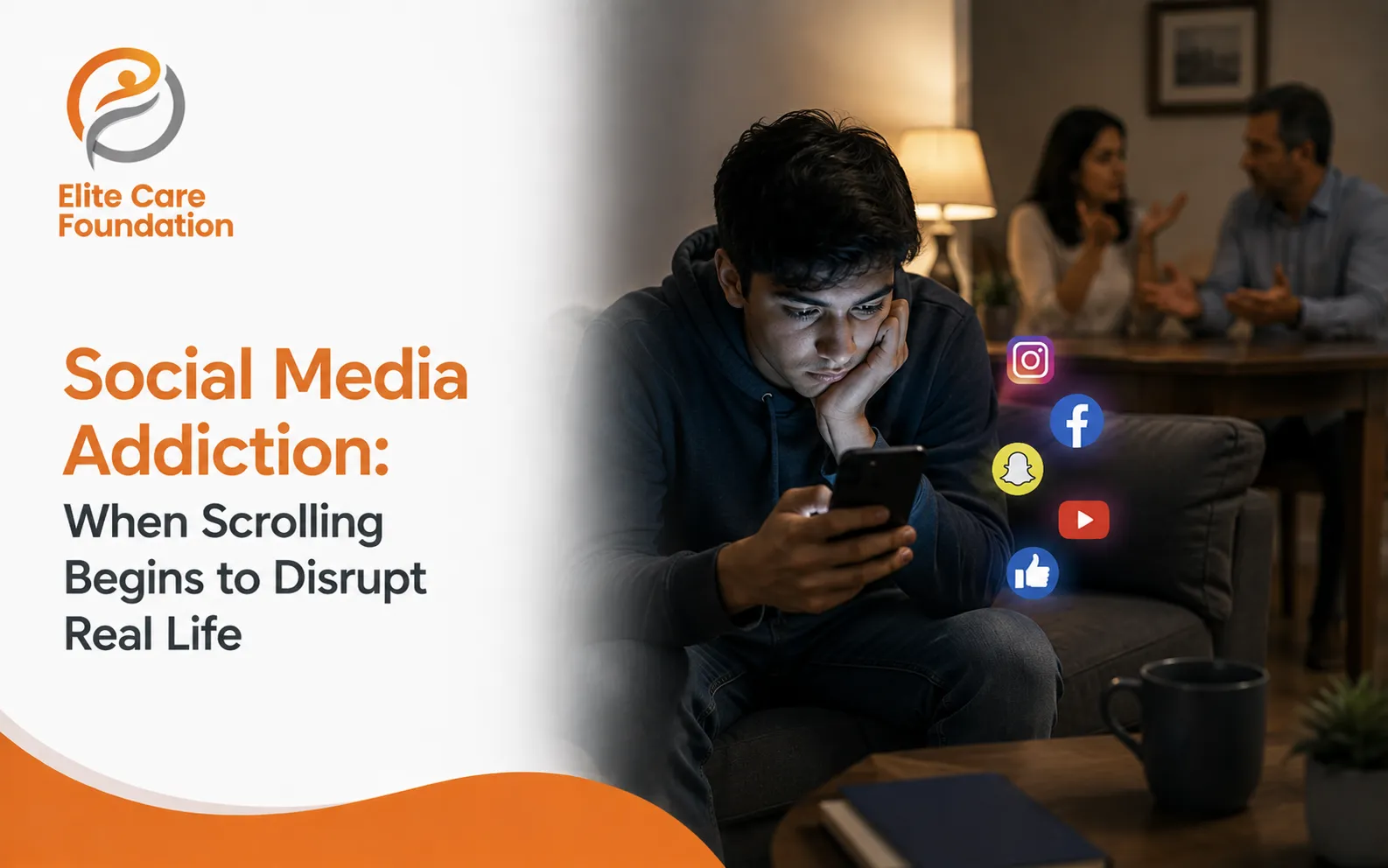
Social media is part of work, friendship and entertainment, so heavy use is not automatically an addiction. The concern begins when a person repeatedly loses control, keeps using despite harm, and cannot meet ordinary responsibilities. A useful assessment asks what the use is replacing: sleep, study, work, exercise, family time or face-to-face relationships.
Look at function, not only screen time
Social media addiction is not listed as a separate disorder in the World Health Organization’s ICD-11. Clinicians may instead describe problematic or compulsive use and assess the harm it causes. Two people can spend the same number of hours online but have very different levels of control. Work-related use should not be counted in the same way as endless, unwanted scrolling.
Possible signs include checking during meals or meetings, waking at night for notifications, hiding usage, failed attempts to reduce it, falling grades, delayed work and strong irritability when access is limited. Comparison with curated images can worsen low mood or body concerns. Online conflict, harassment, sexual content and spending through social platforms may add further risk.
Why simple bans often fail
Taking away a phone may create a temporary break, especially for a child, but it does not explain the need being met by the platform. The person may be seeking relief from loneliness, anxiety, boredom or low confidence. Treatment must identify these triggers and build realistic alternatives. For young people, parents also need consistent rules and their own healthy phone habits.
Families comparing Mumbai Rehabs should ask how a programme distinguishes problematic social media use from depression, anxiety, attention difficulties, bullying or gaming disorder. Residential admission is not required for every case. The level of care should match the severity, home situation and ability to follow an outpatient plan.
Building control without leaving digital life
A practical plan may include notification limits, phone-free meals, a fixed bedtime, removal of the most triggering apps and planned periods for checking messages. Cognitive behavioural methods can challenge automatic thoughts and help a person tolerate the urge to check. Sleep, exercise, social contact and meaningful offline tasks need to be rebuilt, not merely suggested.
Young people need a family plan
For a teenager, sudden removal of every platform can also remove friendships, class groups and social support. Parents can begin with a calm review of sleep, school attendance, online safety and spending. Rules should state when devices can be used, where they remain at night and what happens when a limit is missed. The same adults should avoid constant checking during family time. If online bullying, sexual exploitation or threats are present, evidence should be preserved and safety help sought instead of treating the matter only as excessive screen use.
Mumbai students may depend on phones for travel, tuition and college communication. Treatment should protect these necessary uses while reducing the parts that are causing harm. This makes the plan easier to follow outside a clinic.
Responsible social media addiction treatment in India focuses on restored functioning rather than a dramatic digital detox. Progress can be measured through better sleep, completed work, fewer compulsive checks and more choice over when to log in. If severe depression, self-harm thoughts or online exploitation is present, mental health and safety care must begin promptly.